
Pet Food Texture Analysis & Machine
Pet Food Texture Analyzer & Method
About Us
Introduction to Pet Food Texture Analysis
Pet food texture analyzer is a specialized instrument designed to measure the physical properties of pet foods, including kibble, pellets, and semi-moist products. Texture plays a critical role in animal acceptance, digestibility, and product shelf life. By accurately assessing hardness, chewiness, firmness, and fracturability, manufacturers can optimize formulations, ensure consistency across batches, and maintain regulatory compliance.
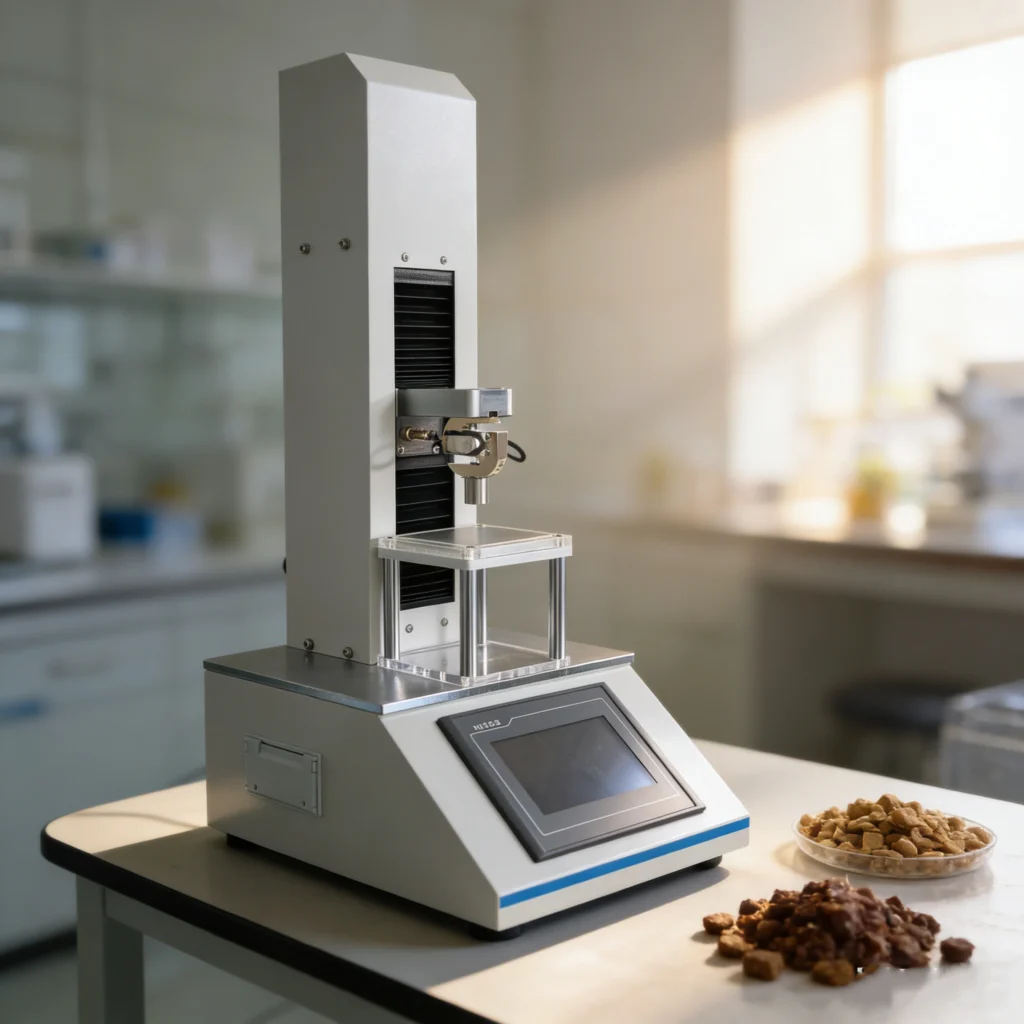
Reliable Texture Analysis for Quality Assurance
Importance of Texture Testing in Pet Food
Texture testing ensures the pet food meets both animal and industry requirements. Hardness affects chew satisfaction and dental benefits, while chewiness and cohesiveness influence palatability and ease of consumption. Consistency in texture across batches enhances brand reputation and reduces complaints from pet owners.
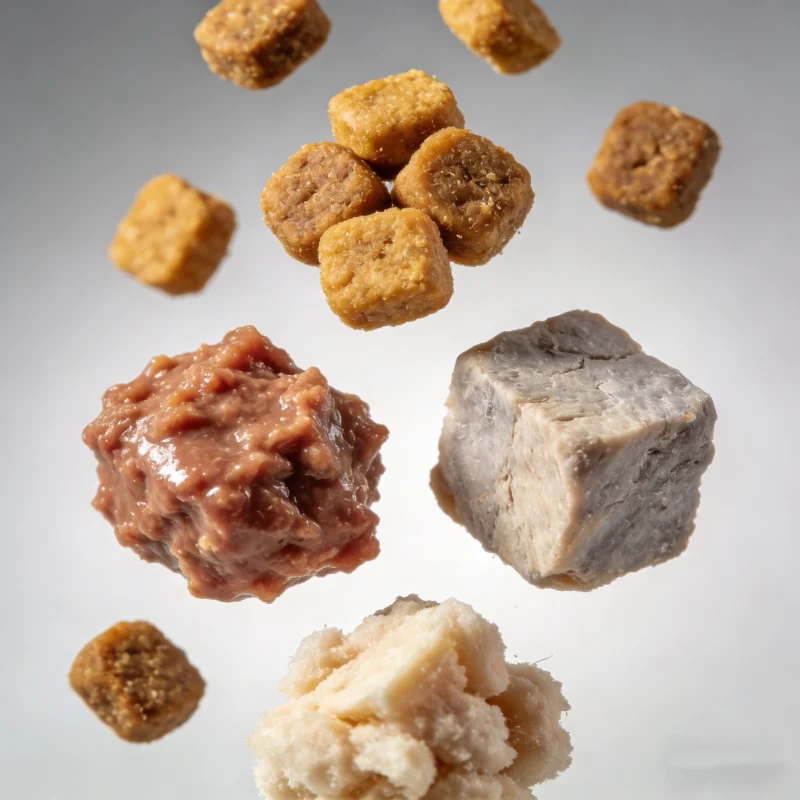
Main Functions and Advantages of the Pet Food Texture Analyzer
The Pet Food Texture Analyzer from Cell Instruments combines precision, automation, and user-friendliness to deliver reliable results for quality control of pet food. Its main functions and advantages include:
- Comprehensive Texture Testing: Measures hardness, chewiness, cohesiveness, and firmness for dry, semi-moist, and wet pet foods.
- Advanced Compression & TPA Analysis: Supports texture profile analysis (TPA) and compression tests to simulate real chewing behavior.
- Optimized for All Pet Food Forms: One instrument handles kibble, semi-moist, and canned food, reducing the need for multiple testers.
- High Precision Sensors: Accurate load cells and displacement sensors ensure repeatable measurements for quality control and R&D.
- User-Friendly Interface: Touchscreen operation with intuitive software, real-time data display, and automatic reporting.
- Customizable Test Fixtures: Includes multiple probes and fixtures suitable for different product shapes and sizes.
- Durable and Low Maintenance: Designed for long-term laboratory and production use with minimal upkeep.
Key Benefits of Texture Testing:
01
Product Consistency
Ensures uniform texture across batches.Accurate, repeatable smoothness Bekk readings.
02
Palatability Optimization
Matches firmness and chewiness to species preferences.
03
Nutrient Preservation
Maintains structural integrity to protect nutritional value.
04
Regulatory Compliance
Helps meet quality standards and internal quality control protocols.
Pet Food Texture Test Methods
Pet food texture analyzers combine multiple methods to provide comprehensive insights:
Pet food products, whether dry kibble, extruded pellets, or semi-moist treats, require precise texture evaluation to ensure quality, palatability, and safety. The following tests are commonly performed using a pet food texture analyzer:
- Hardness Test
Measures the firmness or resistance of pet food to compression. This helps assess chewability and consistency across batches. It is essential for evaluating how easily pets can bite or chew the food. - Puncture Test
Determines the force required to penetrate the surface of the pet food. This test is especially useful for soft treats or coatings, providing data on product durability and breakability during handling or packaging. - Break Strength Test
Measures the force required to fracture or break a pet food piece. This test evaluates structural integrity, ensuring that kibble or pellets do not crumble prematurely, while still being chewable for pets. - Shear Strength Test
Assesses the cutting or slicing resistance of pet food, simulating the action of a pet’s teeth during biting. It provides insight into texture and mouthfeel, helping manufacturers optimize formulations for different pet sizes and breeds.
- Hardness Test
Optimizing Texture for Different Pet Food Forms
Different forms of pet food require distinct texture characteristics to ensure palatability, safety, and product integrity:
01
Dry Pet Food
Requires sufficient hardness and fracturability to promote dental health and maintain shape during storage. Compression and fracture tests are critical to control brittleness and firmness.
02
Semi-Moist Food
Needs balanced chewiness and cohesiveness to prevent crumbling while ensuring easy consumption. TPA texture analysis is useful to optimize springiness and chewiness.
03
Wet or Canned Food
Focuses on firmness and cohesiveness for scoopability and shape retention. Cylinder probe and compression tests help measure resistance without crushing the product.
Pet Food Texture Analyzer
Technical Specifications
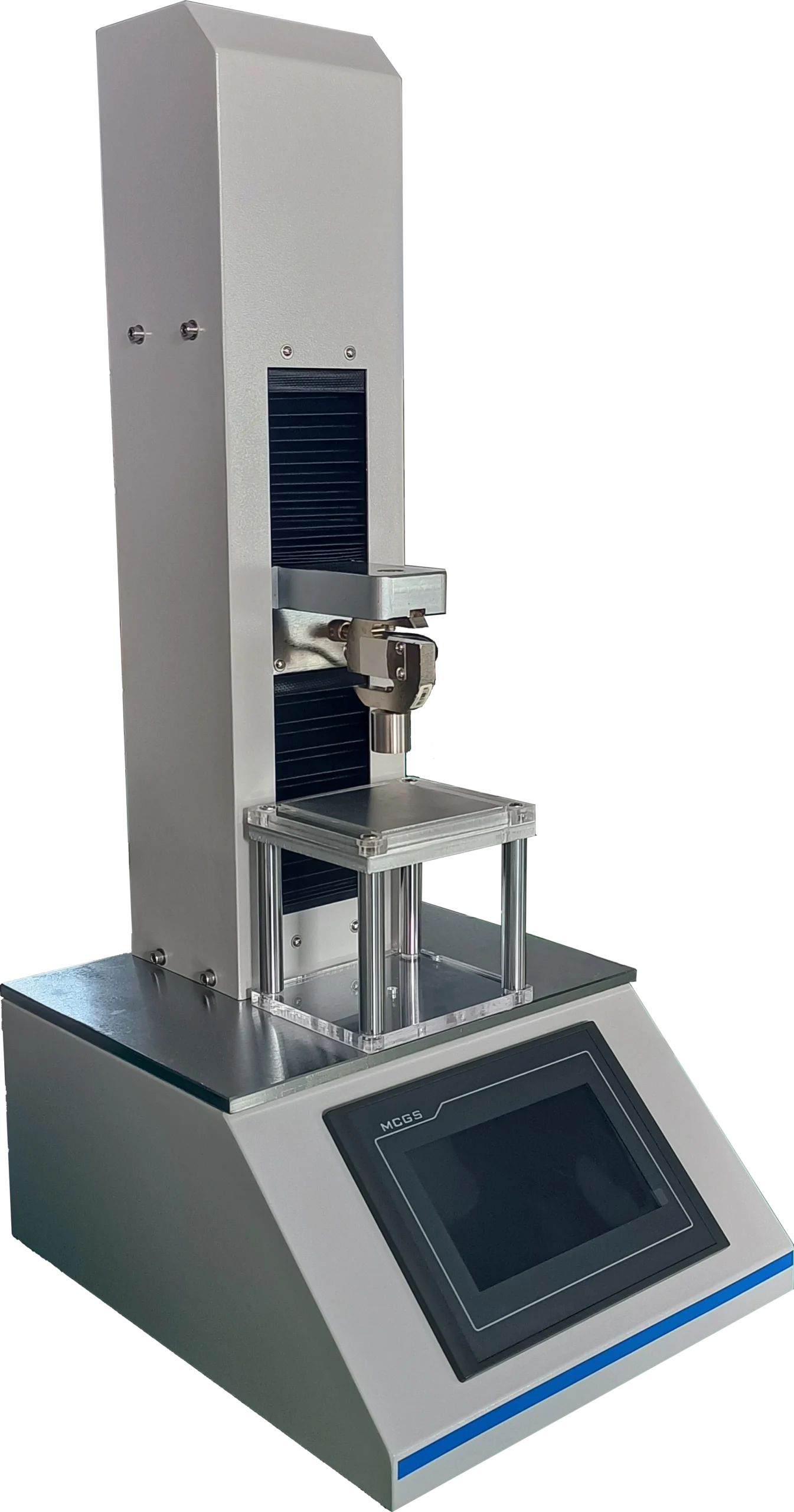
| Parameter | TEX-01 / TEX-01Pro | TEX-02 |
|---|---|---|
| Test Range | 50 kg | 20 kg |
| Speed | 1–500 mm/min | 1–500 mm/min |
| Stroke | 250 mm | 110 mm |
| Key Methods | Compression, Firmness, Hardness, Fracturability, TPA (Pro only) | Compression, Firmness, Hardness, Fracturability |
| Test Fixtures | Suitable for all standard pet food, kibble, and pellet fixtures | Suitable for all standard pet food, kibble, and pellet fixtures |
| Software Features | Automatic Reporting, Batch Comparison | Automatic Reporting, Batch Comparison |
| Power | AC 110–220V | AC 110–220V |
| Dimensions (L×W×H mm) | 410 × 360 × 820 | 450 × 300 × 360 |
Frequently Asked Questions about Pet Food Texture Analysis
Why is texture analysis important for pet food?
Texture analysis ensures that pet food meets quality standards for hardness, chewiness, and consistency, which affects palatability, safety, and nutritional delivery for different pets.
Can the Pet Food Texture Analyzer test both dry and wet pet food?
Yes. The analyzer is designed to handle kibble, semi-moist, and canned food using appropriate probes and test fixtures.
What types of tests can be performed with the analyzer?
Common tests include texture profile analysis (TPA), compression tests, firmness measurement, and cohesiveness evaluation to simulate real chewing behaviors.
How does the analyzer help in product development?
It provides precise, repeatable data that allows formulators to optimize recipes, improve palatability, and maintain batch-to-batch consistency.
Are test results compliant with industry standards?
Yes. Cell Instruments’ Pet Food Texture Analyzer follows internationally recognized practices for food and feed texture evaluation, ensuring reliable and repeatable results.