
Анализ на текстурата на храната за домашни любимци и машини
Pet Food Hardness Test
За нас
Introduction to Pet Food Hardness
Изпитване на твърдостта is a crucial procedure for assessing the mechanical properties and texture quality of pet food products. Understanding the hardness of pet food is essential to ensure both palatability and safety, as excessively hard kibble may be difficult for pets to chew, while overly soft pellets may crumble during handling or packaging. Hardness testing provides measurable data that helps manufacturers maintain consistency across batches and optimize formulations for pets of different sizes and chewing abilities.
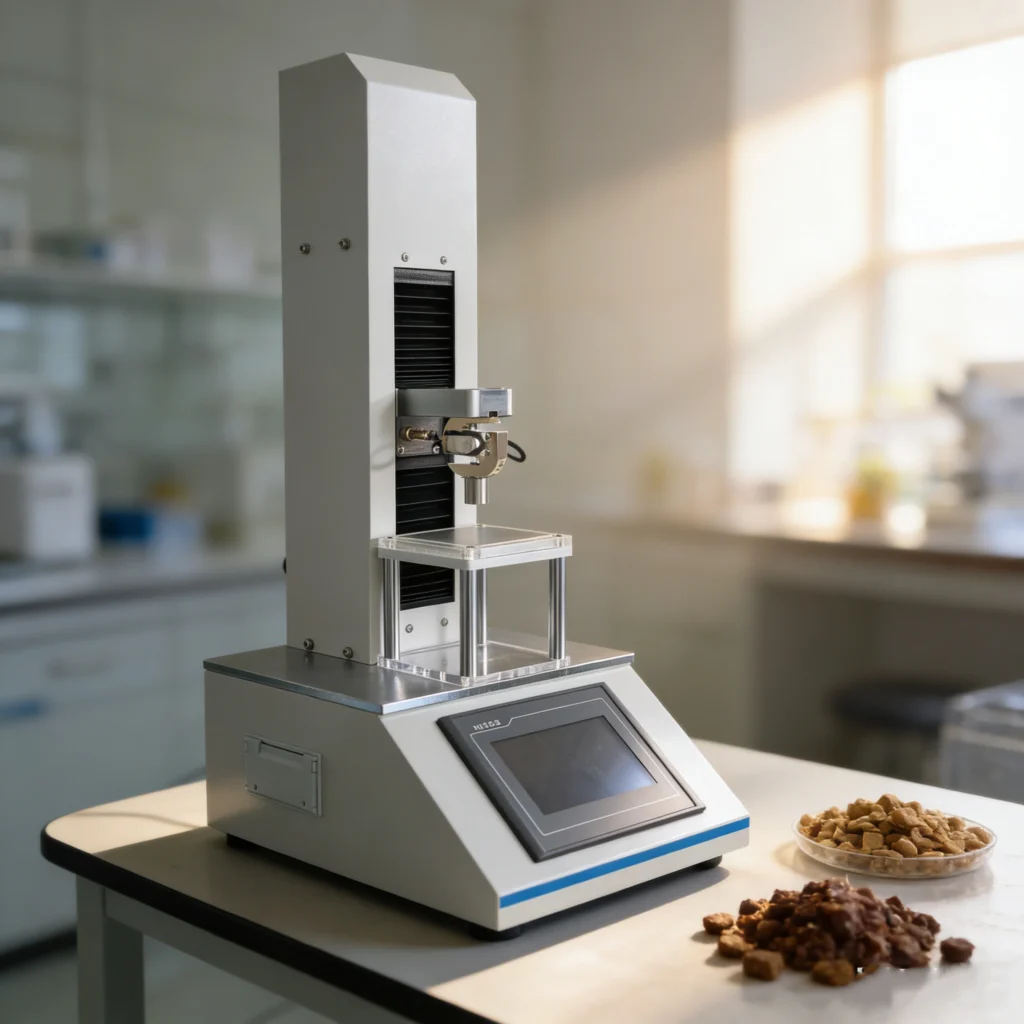
Надежден анализ на текстурата за осигуряване на качеството
Pet Food Texture Analyzer for Hardness Testing
Using a анализатор на текстурата на храната за домашни любимци, manufacturers can perform Firmness measurement and Compression Test to obtain accurate and reproducible data. These instruments simulate the bite force applied by pets, measuring the resistance of pet food samples to compression. This helps evaluate hardness, brittleness, and overall textural consistency, which are key parameters for product development and quality control. Advanced models allow customization of probe type, speed, and compression depth to mimic the chewing behavior of various animals, ensuring realistic testing conditions.
Надежден анализ на текстурата за осигуряване на качеството
Understanding Hardness and Its Importance
Hardness refers to the resistance of a material to deformation under applied force. In pet food, hardness directly impacts:
- Palatability: Pets prefer an optimal texture that is neither too hard nor too soft.
- Dental Health: Proper hardness supports teeth cleaning while preventing damage.
- Product Integrity: Ensures kibble maintains shape during packaging, transport, and storage.
Measuring hardness allows manufacturers to optimize product formulations, maintaining balance between chewability and durability, which ultimately influences pet satisfaction and repeat purchases.
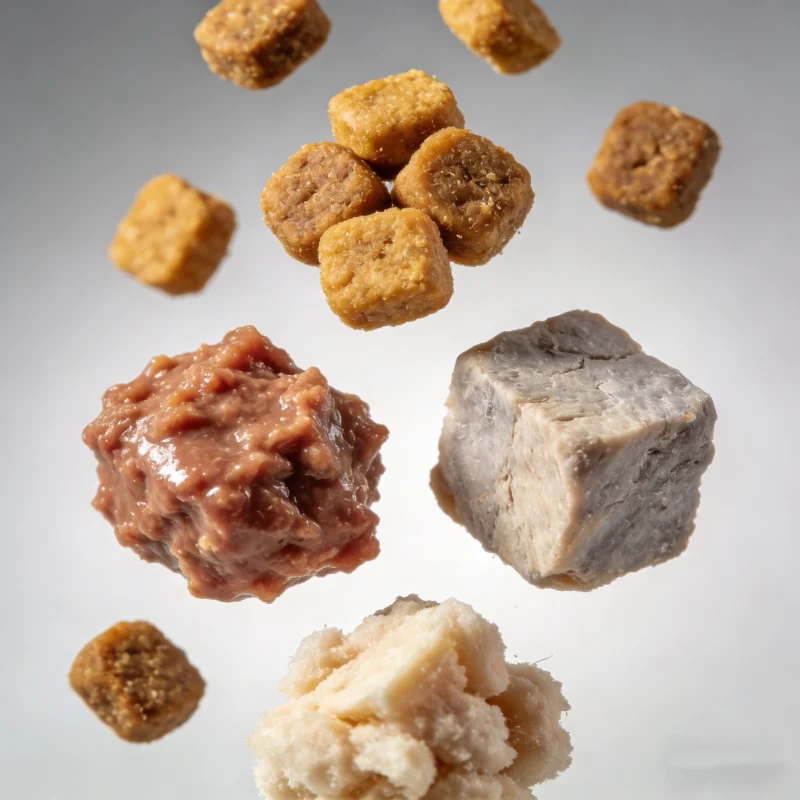
Key Parameters Measured During Hardness Test
The hardness test generates critical parameters, including:
-
Peak Force (N): Maximum force required to compress the pet food. -
Deformation Distance (mm): Distance compressed before peak force is reached. -
Firmness Index: Derived from the force-deformation curves to compare different batches. -
Brittleness and Fracture Behavior: Observed when samples crack or break under applied force.
These measurements enable manufacturers to ensure consistent quality, improve product design, and support R&D for new formulations.The hardness test generates critical parameters, including:
Benefits of Hardness Testing for Pet Food
Performing hardness testing offers several advantages:
01
Quality Control
Detects texture deviations that could affect palatability.
02
Product Development
Optimizes kibble formulation for chewability, nutrient delivery, and pet preference.
03
Safety Assurance
Prevents excessively hard products that may cause dental injury or choking hazards.
04
Съответствие с нормативната уредба
Supports documentation and verification for industry standards.
Recommended Instrument: Cell Instruments TEX-01 for Pet Food Hardness Test
Анализаторите на текстурата на храната за домашни любимци съчетават множество методи, за да предоставят изчерпателна информация:
For precise hardness test and comprehensive texture analysis of food, the Cell Instruments TEX-01 offers an advanced solution tailored for pet food applications. This instrument is equipped with a high-precision cylinder probe texture analyser, capable of performing accurate изпитвания на натиск to evaluate the firmness of kibble, pellets, and wet pet food.
Key features include:
- Adjustable Test Modes: Capable of measuring hardness, elasticity, chewiness, and other texture attributes in a single instrument.
- Wide Force Range and High Accuracy: Ensures reproducible results for a variety of pet food types and sizes.
- User-Friendly Interface: Simplifies operation and data recording, suitable for both R&D and quality control labs.
- Customizable Probe Options: Allows simulation of different chewing forces, accommodating products for dogs, cats, and other pets.
By using the TEX-01, manufacturers can obtain reliable and detailed измерване на твърдостта data, optimize product formulations, and maintain consistent texture quality across batches. This makes it an essential tool for companies aiming to enhance pet satisfaction and product safety.
Pet Food Hardness Analyzer
Технически спецификации

| Specification | TEX-01 |
|---|---|
| Диапазон на изпитване | 50 kg (or others as required) |
| Скорост | 1–500 mm/min (adjustable) |
| Resolution | 0.5% F.S. |
| Stroke (jig excluded) | 250 мм |
| Dimensions (L×W×H) | 410 × 360 × 820 mm |
| Power Supply | AC 110–220 V |
Additional Texture Analysis Capabilities
Modern pet food texture analyzers are versatile and provide more than just hardness data. They can measure:
- Chewiness: How a kibble responds to repeated compression, simulating chewing cycles.
- Brittleness: Determining how easily products crumble under force.
- Elasticity and Cohesiveness: Evaluating structural integrity during mechanical stress.
Such comprehensive testing ensures all aspects of texture profile analysis are captured, providing insights critical for both product development and quality assurance.
Надежден анализ на текстурата за осигуряване на качеството
Why Choose Cell Instruments for Pet Food Testing
Cell Instruments offers precision texture analyzers tailored for pet food applications. Key benefits include:
- High Accuracy and Reproducibility: Ensures reliable measurements for research and production.
- Multiple Testing Modes: Compression, puncture, and texture profile analysis in a single instrument.
- Customizable Solutions: Adjustable probe sizes, speeds, and force ranges to suit different pet food types.
- Professional Support: Guidance for setup, calibration, and workflow optimization.
By choosing Cell Instruments, manufacturers can enhance product quality, consistency, and consumer satisfaction, backed by professional technical support and innovative solutions.
Често задавани въпроси относно анализа на текстурата на храните за домашни любимци
What is a Pet Food Hardness Test and why is it important?
A Pet Food Hardness Test measures the firmness or resistance of pet food products, such as kibble, pellets, or wet food, using a анализатор на текстурата на храната за домашни любимци. This test ensures product consistency, evaluates chewability, and helps maintain optimal texture for different pet types, which is critical for both palatability and safety.
How does the TEX-01 perform a hardness test on pet food?
Сайтът Cell Instruments TEX-01 uses a cylinder probe texture analyser to apply controlled compression on the pet food sample. The instrument records the force required to deform or break the sample, providing accurate измерване на твърдостта and data for quality control or product development.
Can hardness testing help improve pet food formulations?
Yes. By analyzing firmness and texture, manufacturers can adjust ingredients, moisture content, and processing methods to create pet food that meets specific chewability standards and pet preferences, ensuring consistency across batches.
What types of pet food can be tested using the hardness test?
The hardness test is suitable for a wide range of products, including dry kibble, semi-moist treats, extruded pellets, and wet canned food. Different probe types and test modes allow adaptation to various product shapes and sizes.
A Pet Food Hardness Test measures the firmness or resistance of pet food products, such as kibble, pellets, or wet food, using a анализатор на текстурата на храната за домашни любимци. This test ensures product consistency, evaluates chewability, and helps maintain optimal texture for different pet types, which is critical for both palatability and safety.
Сайтът Cell Instruments TEX-01 uses a cylinder probe texture analyser to apply controlled compression on the pet food sample. The instrument records the force required to deform or break the sample, providing accurate измерване на твърдостта and data for quality control or product development.
Yes. By analyzing firmness and texture, manufacturers can adjust ingredients, moisture content, and processing methods to create pet food that meets specific chewability standards and pet preferences, ensuring consistency across batches.
The hardness test is suitable for a wide range of products, including dry kibble, semi-moist treats, extruded pellets, and wet canned food. Different probe types and test modes allow adaptation to various product shapes and sizes.